
News & Updates
- GlueOnline
- 29 Jun 2026
GlueOnline's Guide to cyanoacrylates
Cyanoacrylates are popular adhesives for bonding a wide range of materials, but what are they and why use them? GlueOnline have put together an introductory Guide to cyanoacrylates to help you choose the right one.
What are cyanoacrylate adhesives?
Cyanoacrylates are instant adhesives, also called superglue or CA adhesives. They offer fast ...
- GlueOnline
- 19 Jun 2026
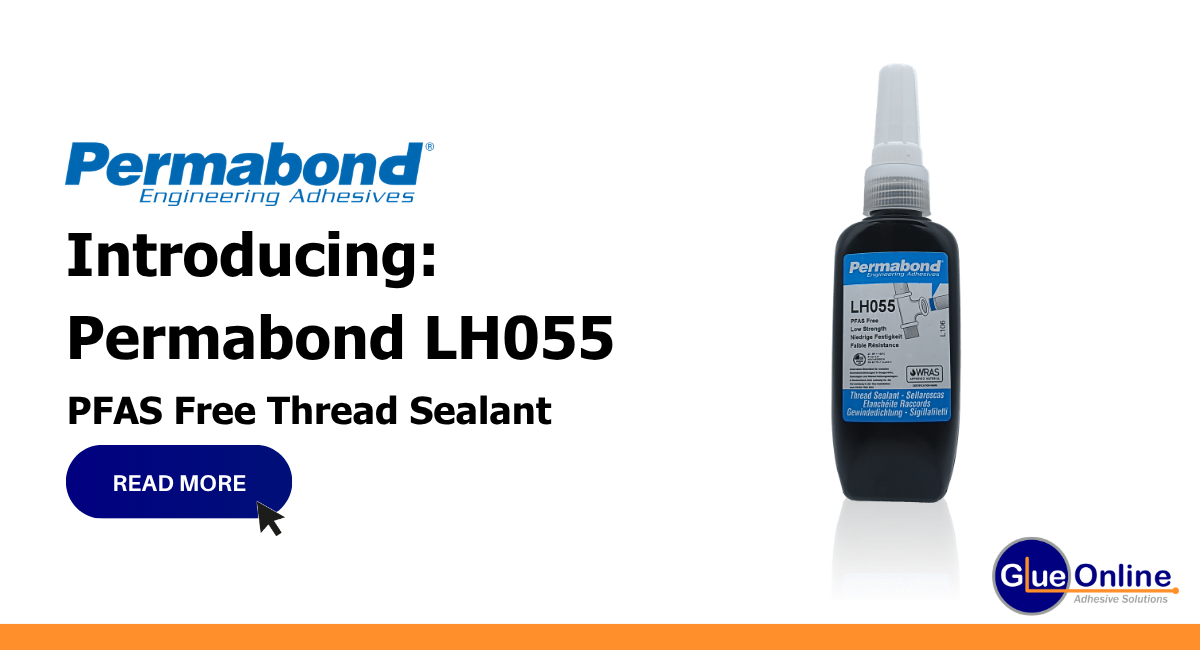
Introducing the new PFAS free thread sealant Permabond LH055
Introducing, Permabond LH055, a new PFAS free thread sealant which is WRAS approved and suitable for use on both parallel and tapered threads.
What are PFAS?
Per- and polyfluoroalkyl substances of PFAS are a group of manmade chemicals which enhance the performance and durability of adhesives PFAS are used across manufacturing and industry due to ...
- GlueOnline
- 21 May 2026
GlueOnline Guide to Threadlockers
Liquid thread locker adhesives or threadlockers, replace traditional mechanical locking methods and come in a variety of colours and viscosities. Below we have put together a short guide to threadlockers and some frequently asked questions.
What are threadlockers?
A threadlocker is an anaerobic single part adhesive used to bond and seal ...
- GlueOnline
- 24 Apr 2026
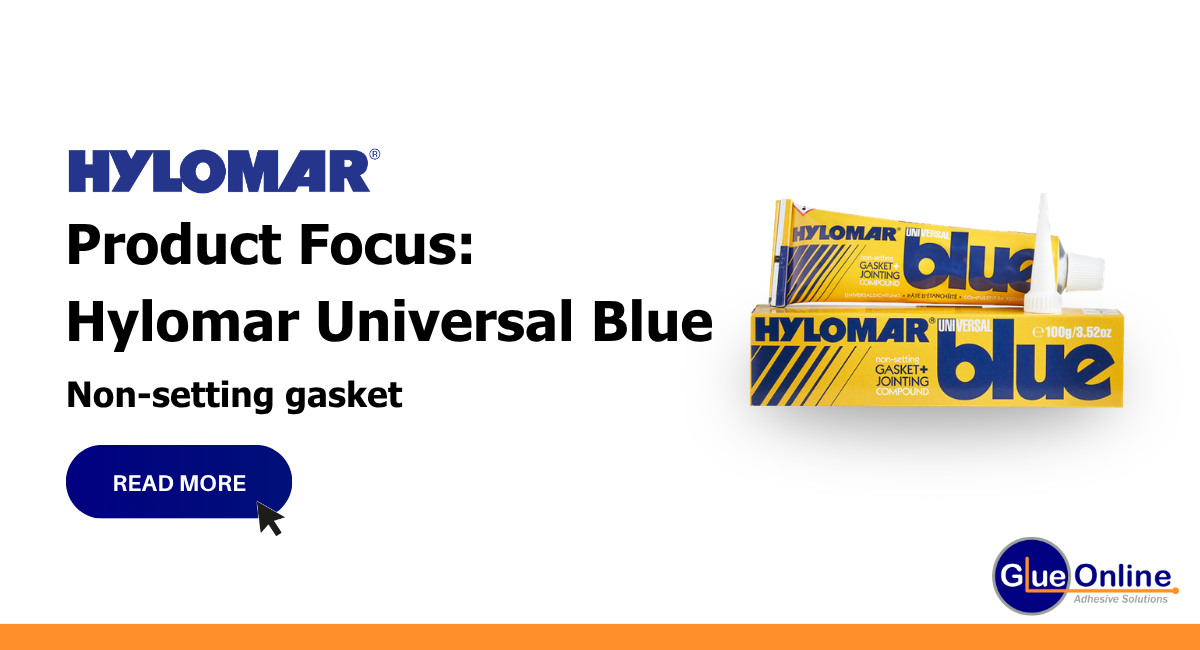
Product Focus: Hylomar Universal Blue
What is Hylomar Universal Blue?
Hylomar Universal Blue is a non-setting gasket and joining compound which is used to seal joint faces or threaded parts.
This polyester urethane based sealant allows for an unlimited assembly time and is non-hardening even at high temperatures. The sealant also resists a wide range of fluids including ...
- GlueOnline
- 27 Mar 2026
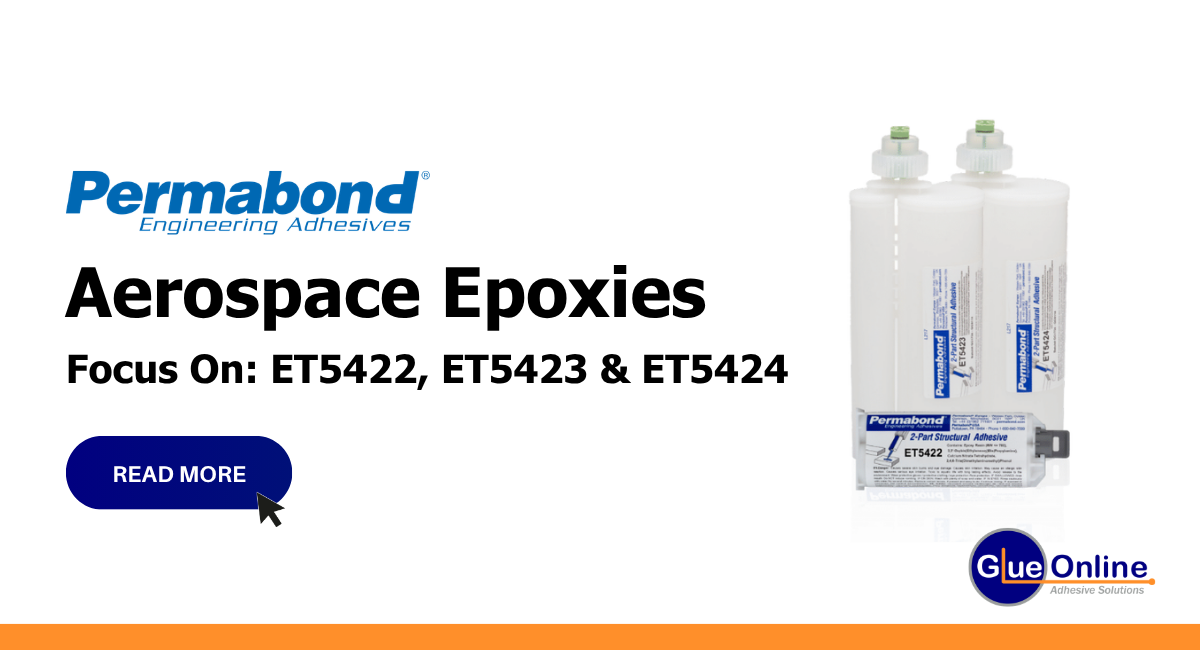
Aerospace Epoxies from Permabond
Why use Permabond epoxies for aircraft and space bound applications?
Permabond have a range of high strength, high performance epoxy adhesives, some of which have been developed specifically for the aerospace industry.
Epoxies allow for the bonding of components without increasing weight in the same way that mechanical fasteners would which is ...
- GlueOnline
- 4 Mar 2026
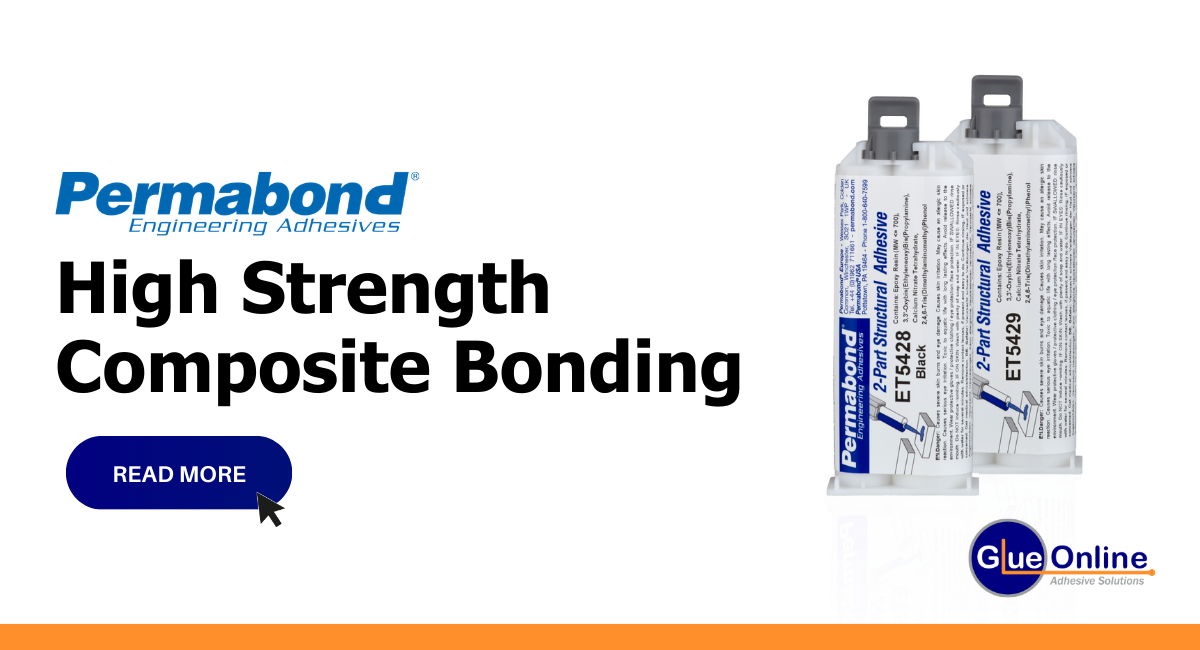
Composite Bonding with Permabond Epoxies
To ensure high strength reliable composite bonding, epoxy adhesives are the perfect solution, but why, and what options are available?
What are composite materials?
Composites are engineered materials which consist of two or more distinct materials, usually a reinforcement and base. They are popular due to their low weight and tend to ...

- GlueOnline
- 3 Feb 2026
Our Guide to Epoxy Adhesives
Epoxy adhesives are one of the many types of adhesives available, but what are their benefits and which one should you use? Below we have put together a guide to epoxy adhesives, the different types, benefits, and uses…
What are epoxy adhesives?
Epoxy adhesives are a popular type of structural adhesive, which consists of two parts: ...
- GlueOnline
- 6 Jan 2026
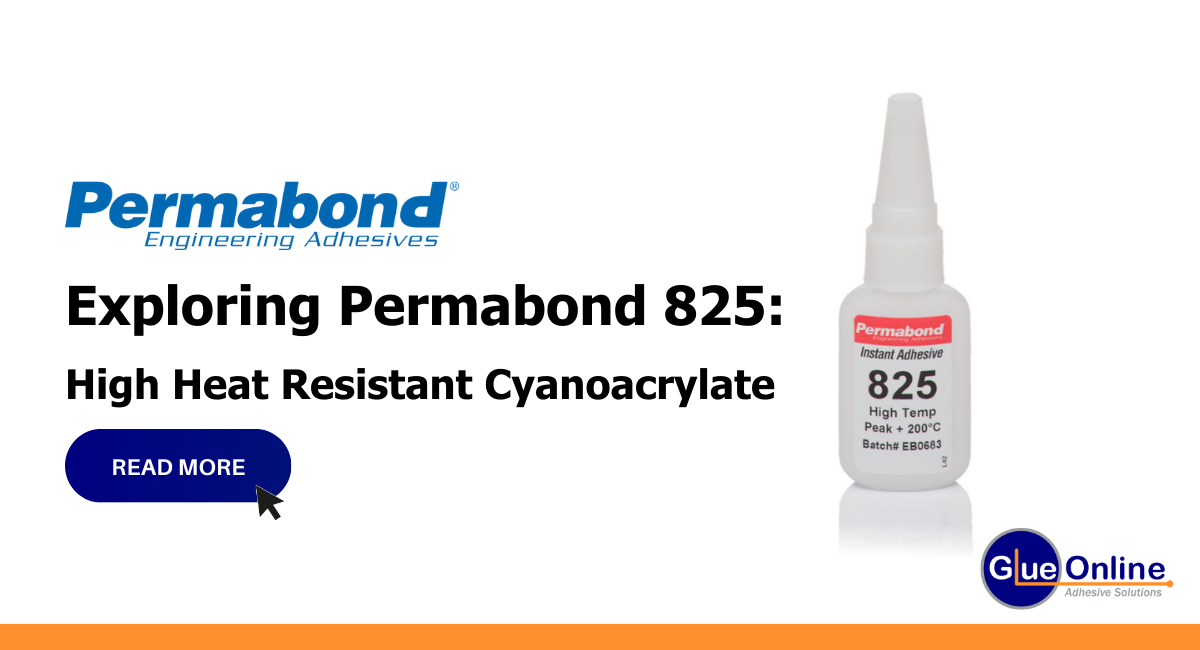
Permabond 825; Heat resistant cyanoacrylate
Typically a Heat resistant cyanoacrylate can only withstand at most 150°C and often requires a post or secondary cure to do so, which costs time and money.
Permabond 825; Heat Resistant Cyanoacrylate
However, Permabond 825 cyanoacrylate adhesive offers high heat resistance up to 200°C without the need for a secondary cure. This ...
- GlueOnline
- 28 Nov 2025
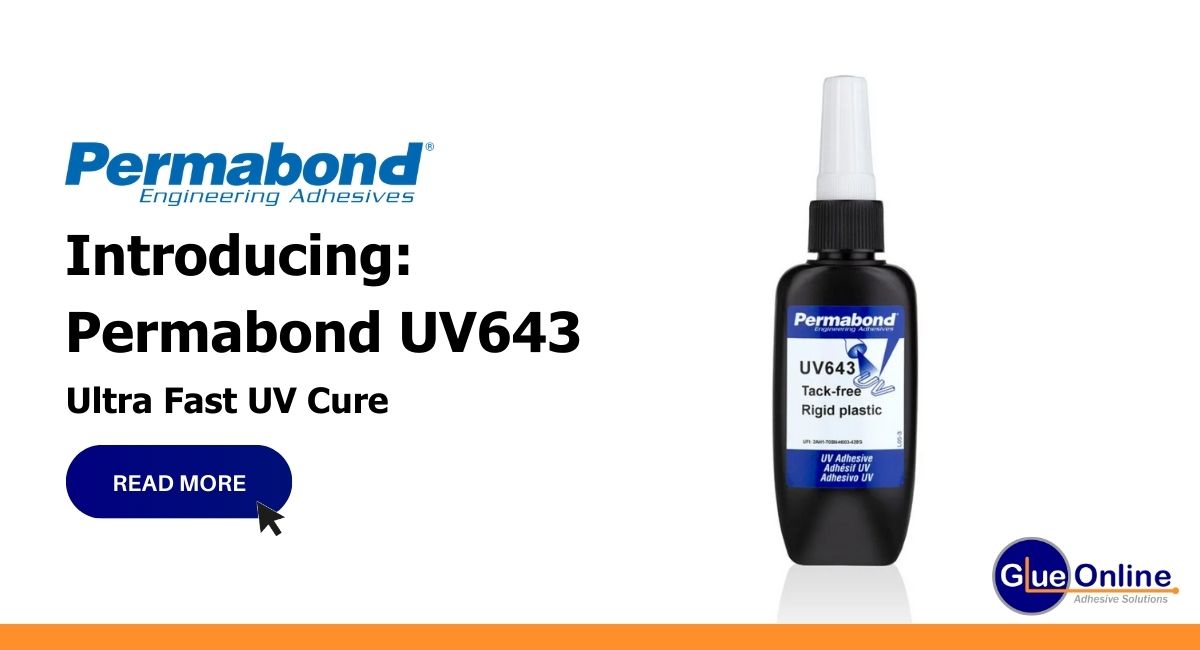
Introducing: Permabond UV643; Ultra-Fast UV Curing
Permabond UV643 is an ultra-fast, UV curing adhesive which is ideal for bonding dissimilar surfaces such as plastic to metal or plastic to glass. Curing to a tack free finish, Permabond UV643 was developed for fast bonding of rigid plastics and is suitable for several thermoplastics including polycarbonate, PMMA PETG, PET, and ABS.
Permabond ...

- GlueOnline
- 1 Oct 2025
Multi-Purpose Adhesives: Permabond TA4550 & TA4611
Why Use Multi-Purpose Adhesives?
Multi-Purpose adhesives are ideal for applications where you’re not sure which adhesive is the best solution. Although multi-purpose adhesives usually have a specific application they’re suited to, they are also highly effective at bonding a range of substrates, making them incredibly convenient to have ...
Recent Posts
1
GlueOnline's Guide to cyanoacrylates
29 Jun 2026
3
GlueOnline Guide to Threadlockers
21 May 2026
4
Product Focus: Hylomar Universal Blue
24 Apr 2026
5
Aerospace Epoxies from Permabond
27 Mar 2026