
Our Guide to Epoxy Adhesives
- GlueOnline
- News & Updates
- 3 Feb 2026 views

Epoxy adhesives are one of the many types of adhesives available, but what are their benefits and which one should you use? Below we have put together a guide to epoxy adhesives, the different types, benefits, and uses…
What are epoxy adhesives?
Epoxy adhesives are a popular type of structural adhesive, which consists of two parts: resin and hardener (curing agent). Mixing these parts creates a chemical reaction, and when cured forms a thermoset plastic. This bond cannot be melted when reheated after curing.
Epoxy adhesives are available premixed (1-part), or as the separate components (2-part) and can be formulated to have specific characteristics. Durable in demanding conditions, these adhesives form very strong bonds, making them suitable for a range of industries including marine, electronics, and automotive.
1-part or 2-part, what is the difference?
When choosing whether to use a single part or two component epoxies, you must consider the application first.
1-part epoxy adhesives
1 part epoxy adhesives eliminate mixing and related wastage but require heat to cure and refrigerated storage.
They are environmentally durable adhesives, and due to high temperature thermal cure these adhesives offer outstanding strength at elevated temperatures. However, innovations are creating formulations which can cure at lower temperatures for greater flexibility and impact resistance.
Single part epoxies usually remain stable at room temperature except for a few specialised formulas, making them good where long open time is needed such as bonding a large area or complex design. They are also easier to automate, making them ideal for production lines.
2-part epoxy adhesives
2-part epoxy adhesives begin curing when the components are mixed and offer different characteristics based on formulation. They are available in various viscosities and static mixing nozzles can be attached to cartridges to mix the components while dispensing.
Much like 1-part epoxies, they offer excellent bond strength and are environmentally durable. However, they cure at room temperature and can also be stored at room temp.
Two component epoxy forumulations range from rigid to flexible with some forumlations for fatigue resistance. Rigid epoxies have higher tensile strength at lower elongations, while flexible epoxies have lower tensile strength at higher elongations to withstand differential movement. Toughened epoxies have higher tensile strength at lower elongations for fatigue resistance and are best suited for dynamic stresses.
Why use epoxy over acrylic?
Both epoxies and structural acrylics are strong adhesives that achieve high bond strength through crosslinking. Epoxies are ideal where components must remain fixed under constant stress, while acrylics are ideal for high-speed manufacturing and demanding assembly environments.
Epoxies are also customisable. It is possible to alter thickness, curing speed, colour, temperature resistance and toughness, as well as make them food compliant to meet FDA regulations
What are the benefits of epoxy adhesives?
- Exceptional resistance to shock, vibration and impact loads
- Highly versatile
- Excellent bond strength
- Chemical and water resistance
- Excellent environmental resistance
- Maintain dimensional stability with minimal shrinkage during cure
- Highly customisable
- Low odour
Where can you use epoxy adhesives?
Different epoxy formulations can be used for different applications; some potential applications include:
- Woodworking
- Bonding tools & machinery
- Outdoor applications
- Sealing heat exchanger tubes and endplates
- Bonding electric motor magnets
- Die attach and encapsulation
- Kitchen countertops and appliance assembly
- Structural repair and anchoring
- Hull and composite repairs
- Mounting brackets
- DIY and household repairs
- Wind and electrical component bonding
What material can epoxy be used on?
Epoxy adhesives form excellent structural bonds to a wide variety of materials, including metals, composites, wood, and even some plastics. Some are also suitable for use on glass, concrete, ceramic, and PVC.
Products to Consider:
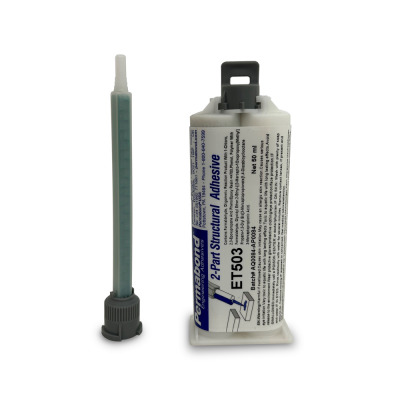
Permabond ET503 Fast Curing Epoxy – great for outdoor applications with resistance to water, moisture, humidity and harsh weather, as well as able to bond underwater.
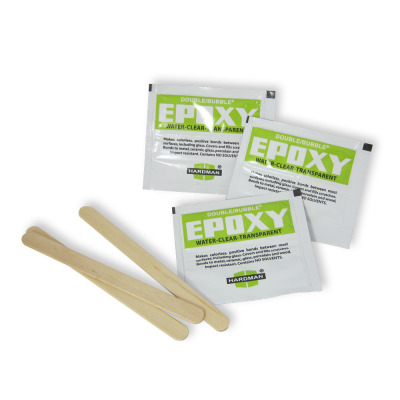
Hardman Double Bubble Green Epoxy – water clear room temperature cure epoxy in a handy job sized packet to reduce waste and allow on site repairs.
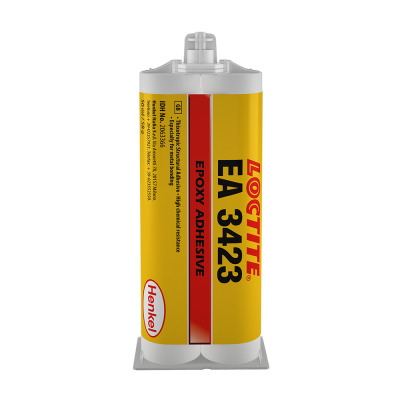
LOCTITE EA 3423 General Purpose Epoxy – ideal for gap filling and vertical applications and offers excellent chemical resistance.
Related Posts
Related Products
Recent Posts


 RSS Feed